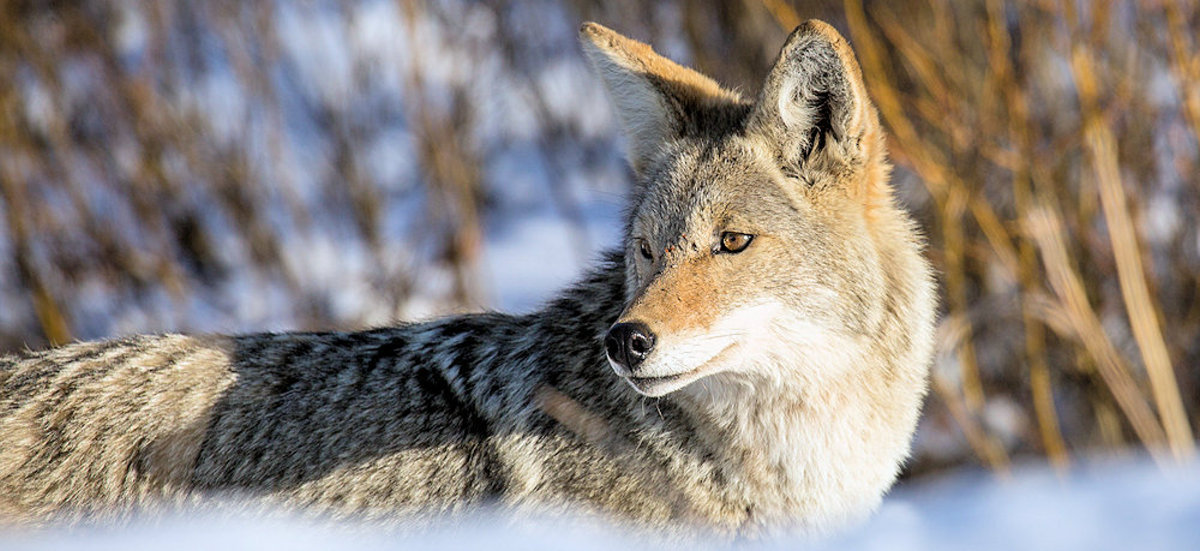
Often overshadowed by their larger cousin, the gray wolf, the coyote (Canis latrans) is one of the most resilient and visible predators in Yellowstone. While wolves were absent from the park for 70 years, coyotes reigned as the top canine, adapting to every corner of the ecosystem.
Where to Find Them
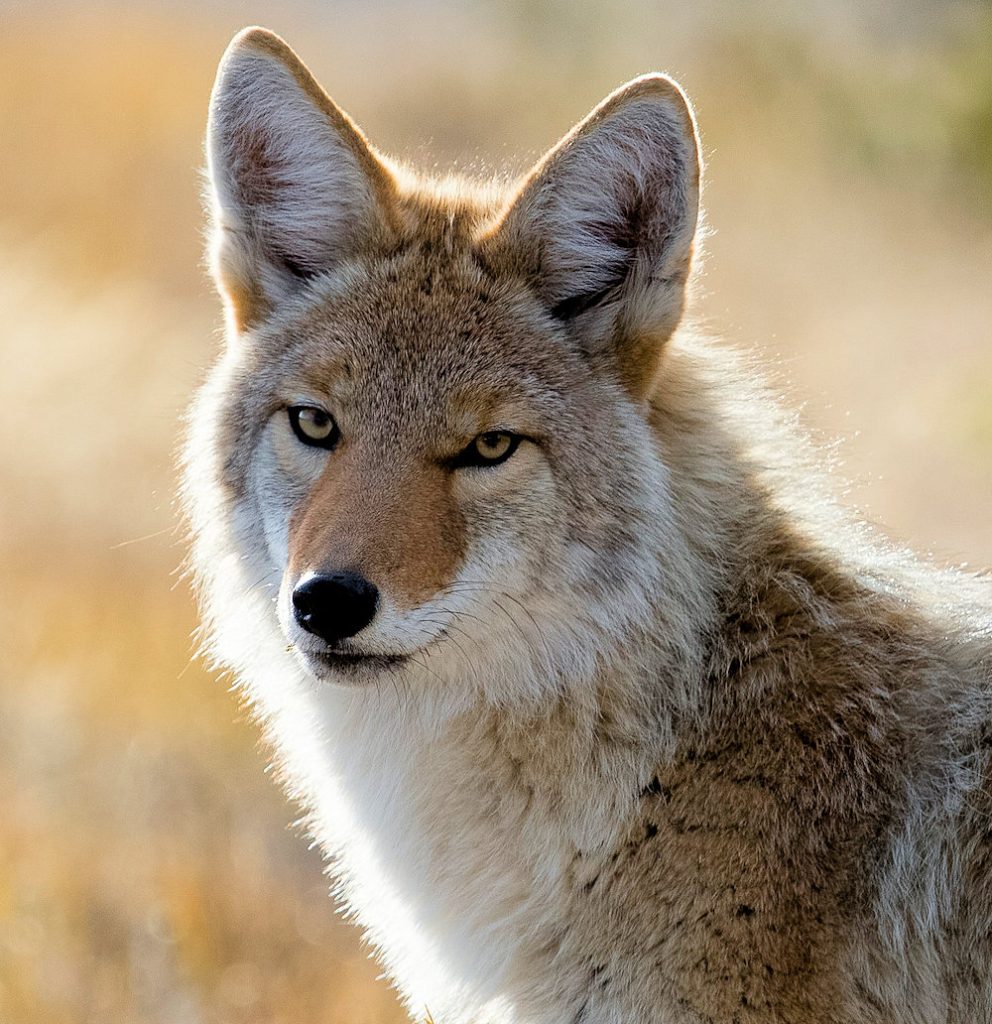
Coyotes are habitat generalists, meaning they can be found almost anywhere in the park, from the lowest valleys to the high peaks.
- Lamar and Hayden Valleys: The wide-open meadows make it easy to spot them hunting for voles and ground squirrels.
- Roadsides: Coyotes are less shy than wolves and are frequently seen trotting along the Grand Loop Road.
- Canyon Village & Mammoth: They often patrol the edges of developed areas where rodents are plentiful.
The “Song Dog” of the West
The coyote’s scientific name, Canis latrans, literally means “barking dog.” They are famous for their vocalizations, which serve as a GPS for pack members.
- The “Yip-Howl”: A high-pitched series of yips followed by a long howl. It is often used to announce a kill or defend a territory.
- The Ventriloquist Effect: Due to the variety of sounds one coyote can make, a pair of coyotes can sound like a pack of ten, a clever trick to intimidate rivals.
Comparison: Coyote vs. Wolf
Distinguishing a large coyote from a small wolf is a common challenge for Yellowstone visitors.
| Feature | Coyote | Gray Wolf |
| Weight | $25$–$45$ lbs | $80$–$120$ lbs |
| Ears | Tall and Pointed | Shorter and Rounded |
| Snout | Long and Narrow (pointy) | Broad and Blocky |
| Tail Position | Carried low or between legs when running | Carried straight out or up |
| Social Unit | Pairs or small family groups | Large, complex packs |
The “Mouser” Technique
The most entertaining coyote behavior to witness is their hunting style, often called “mousing.”
- The Listen: The coyote stands perfectly still, tilting its head to pinpoint the sound of a vole moving under the snow or grass.
- The Pounce: It leaps high into the air in a graceful arc.
- The Pin: It lands front-paws-first to pin the rodent before delivering a quick bite.
Relationship with Wolves
The reintroduction of wolves in 1995 drastically changed life for Yellowstone’s coyotes.
- Competition: Wolves view coyotes as competitors and will often kill them if they catch them near a carcass.
- Population Shift: After 1995, the coyote population in the park dropped by nearly 50%, forcing them to become more observant and cautious.
- The Scavenge: Despite the danger, coyotes often “commute” behind wolf packs, waiting for the larger canines to finish a meal so they can scavenge the remains.
Safety Note: Never feed a coyote. Coyotes that lose their fear of humans (habituation) often become aggressive and may have to be removed from the park for safety.Madison, Firehole and Gibbon rivers. Lamar Valley is a good place but the introduction of the wolf has displaced many in that area. Hayden Valley is another good spot.