Established on March 1, 1872, Yellowstone National Park is widely considered the first national park in the world. Spanning across Wyoming, Montana, and Idaho, it covers over 2.2 million acres of diverse landscapes, from high-altitude lakes and deep canyons to jagged mountain ranges.
The park is a global icon of conservation and serves as the centerpiece of the Greater Yellowstone Ecosystem, one of the last nearly intact temperate-zone ecosystems on Earth.
Yellowstone National Park, established in 1872 as the world’s first national park, is a massive 2.2-million-acre wilderness sitting atop a volcanic hot spot. It is world-renowned for its geothermal wonders and for being home to the largest concentration of mammals in the lower 48 states.
Top 10 Places to Visit
These iconic landmarks represent the best of Yellowstone’s geothermal activity, dramatic canyons, and wildlife-rich valleys:
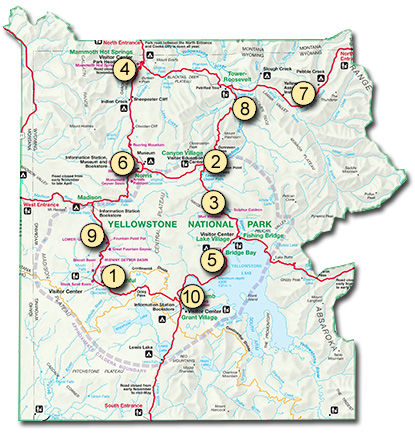
Recommended 3-Day Yellowstone Itinerary
If you’re planning your first trip, this “Great Loop” itinerary ensures you see the most iconic sights while managing the park’s massive scale.
Day 1: Geysers and Paint Pots (Southwest Loop)
Focus on the park’s famous geothermal features.
- Morning: Arrive early at Old Faithful Geyser to beat the crowds. While waiting for an eruption, explore the surrounding Upper Geyser Basin, which contains the highest density of geysers in the world.
- Afternoon: Drive north to the Grand Prismatic Spring at Midway Geyser Basin. For the best view of its rainbow colors, take the short hike to the Grand Prismatic Overlook.
- Evening: Stop by Fountain Paint Pots to see bubbling mud pots and colorful bacteria mats before heading to your lodging.
Day 2: Canyons and Waterfalls (Central Loop)
Experience the dramatic “Grand Canyon” of the wilderness.
- Morning: Head to the Grand Canyon of the Yellowstone. Visit both the North and South Rims. Don’t miss Artist Point for the most famous view of the Lower Falls.
- Afternoon: Drive toward Hayden Valley. This is one of the best spots in the park for wildlife viewing; look for massive bison herds and the occasional grizzly bear near the river.
- Evening: Relax by Yellowstone Lake, the largest high-elevation lake in North America. The Lake Hotel area offers a great spot for a sunset stroll.
Day 3: Terraces and Wolves (Northern Loop)
Explore the unique geology of the north and the “American Serengeti.”
- Morning: Visit Mammoth Hot Springs near the North Entrance. Walk the boardwalks to see the steaming travertine terraces that look like melting wax.
- Afternoon: Drive east through the Lamar Valley. This area is world-renowned for wolf and bear sightings. Bring binoculars and look for “wolf watchers” with spotting scopes—they are usually happy to share what they’ve found.
- Evening: Exit through the Roosevelt Arch in Gardiner, Montana, for a classic photo op to end your journey.
Essential Travel Tips
- Start Early: Aim to be at your first major destination by 8:00 AM to avoid traffic and full parking lots.
- Download Offline Maps: Cell service is non-existent in most of the park. Use the official map or a GPS app that works offline.
- Keep Your Distance: Always stay at least 100 yards from bears/wolves and 25 yards from all other wildlife.
Yellowstone National Park Entrance Fees (Valid for 7 Days)
Standard Entrance Pass
For Vehicles
The following passes grant entry into Yellowstone National Park and are valid for seven consecutive days from the date of purchase:
| Pass Type | Cost | Notes |
|---|---|---|
| Private Non-Commercial Vehicle | $35.00 | Covers the pass holder and all accompanying passengers in a single vehicle. |
| Motorcycle or Snowmobile | $30.00 | Covers the pass holder and all accompanying passengers on a single motorcycle or snowmobile. |
| Individual Entry | $20.00 | Per person (age 16+) entering by foot, bicycle, or ski. |
Vehicles must be private, non-commercial, and with a seating capacity of 15 or less.
For a complete list of entrance fee options please visit our Entrance Fee page
Essential Regulations
To protect both visitors and the fragile ecosystem, the National Park Service enforces strict regulations:
- Wildlife Distance: You must stay at least 100 yards from bears and wolves, and 25 yards from all other wildlife, including bison and elk.
- Hydrothermal Safety: Stay on designated boardwalks and trails. The ground in thermal areas is thin and fragile; stepping off can result in severe burns or death.
- Pets: Pets are prohibited on all trails, boardwalks, and in the backcountry. They must remain leashed and within 100 feet of roads or parking areas.
- Drones: The use of unmanned aircraft (drones) is strictly prohibited within park boundaries.
#1 Thing to Know Before Visiting
Be Bear Aware. Yellowstone is grizzly and black bear country. It is highly recommended that you carry bear spray when hiking, know how to use it, and never hike alone. Additionally, the park is massive—driving between major attractions can take several hours due to low speed limits and frequent “bison jams,” so plan your itinerary strategically.
Yellowstone Fast Facts
Waterfalls: There are approximately 290 waterfalls throughout the park that are at least 15 feet tall.
Size: Over 3,472 square miles, making it larger than Rhode Island and Delaware combined.
Geology: Home to more than 10,000 hydrothermal features and over 500 active geysers.
Wildlife: Contains 67 species of mammals, the highest concentration in the contiguous U.S.
Location: While 96% of the park is in Wyoming, it also stretches into Montana (3%) and Idaho (1%).