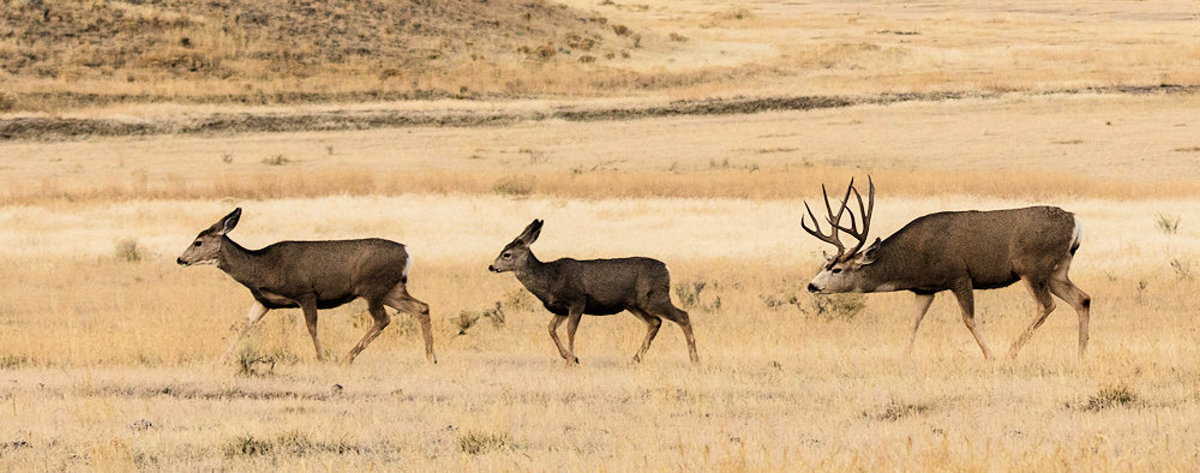
Named for their oversized, expressive ears, the Mule Deer (Odocoileus hemionus) is a staple of the American West and one of the most frequently encountered mammals in Yellowstone. While they might look like “just a deer” compared to a grizzly or a wolf, they are masters of high-altitude survival and possess some of the most unique movement styles in the animal kingdom.
Where to Find Them
Mule deer are habitat generalists, but they prefer “edge” environments where forests meet open meadows or shrublands.
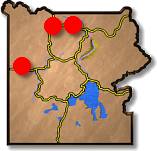
- Mammoth Hot Springs: This is the most reliable spot. Mule deer are often seen lounging on the lawns of the historic district or foraging near the travertine terraces.
- The North Entrance (Gardiner): In the winter, almost the entire park population migrates to the lower, drier elevations around Gardiner and the Montana border.
- Lamar & Hayden Valleys: While these areas are famous for bison, look for mule deer along the brushy draws and riverbanks.
- East Entrance & Sylvan Pass: You can often spot them on the steep, rocky slopes where their specialized gait gives them an advantage over predators.
The “Stott”: A Unique Way to Move
The most fascinating thing about a mule deer is how it runs. When startled, they don’t just sprint; they “stot” (or pronk).
- The Motion: They spring into the air, landing with all four hooves hitting the ground simultaneously.
- The Advantage: This pogo-stick-like movement allows them to clear obstacles like fallen logs and boulders with ease, making it difficult for a predator (like a wolf) to maintain a high-speed chase through rugged terrain.
Mule Deer vs. White-Tailed Deer
Yellowstone is home to both species, and they are easy to confuse at a distance. Here is how to tell them apart:
| Feature | Mule Deer | White-Tailed Deer |
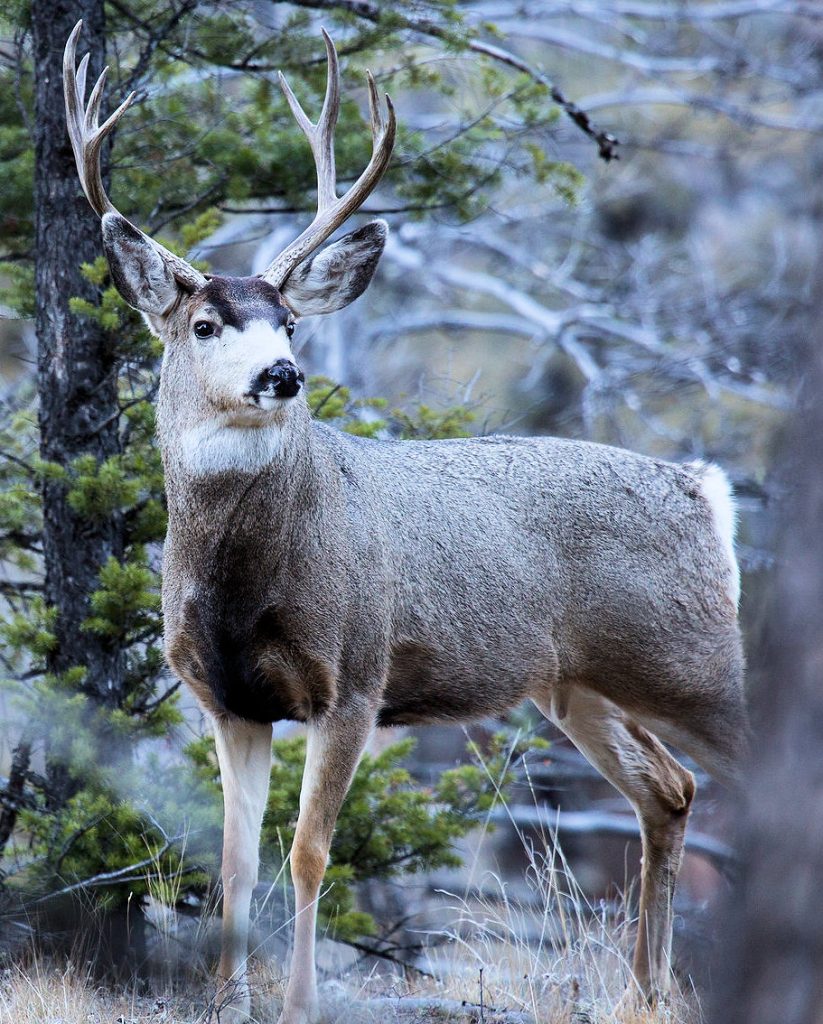
| Ears | Massive (mule-like); usually 2/3 the length of the head. | Smaller and more proportionate. |
| Tail | Rope-like and thin with a black tip. | Broad and bushy with a bright white underside (the “flag”). |
| Antlers | Bifurcated (the main beam forks in two, then forks again). | Tines grow straight up from one main beam. |
| Rump | Large, conspicuous white patch. | Brown, unless the tail is raised. |
Life in the Greater Yellowstone Ecosystem
- The Migration: Mule deer are legendary migrators. Some herds travel over 100 miles from the park’s interior to winter ranges in the Bighorn Basin or Cody, Wyoming. They “surf the green wave,” following the melting snowpack uphill in the spring to eat the most nutrient-rich new growth.
- Diet: They are primarily browsers, meaning they prefer woody shrubs, leaves, and twigs over grass. In Yellowstone, they love bitterbrush, serviceberry, and sagebrush.
- Population Status: While widespread, mule deer populations in the West have faced challenges from Chronic Wasting Disease (CWD) and habitat fragmentation. In 2026, biologists continue to monitor their migration corridors to ensure they can move freely between their summer and winter homes.
Safety Tip: Like all deer, they may seem “tame” in areas like Mammoth, but they can be very defensive—especially mothers with fawns in June. Keep at least 25 yards (23 meters) of distance.