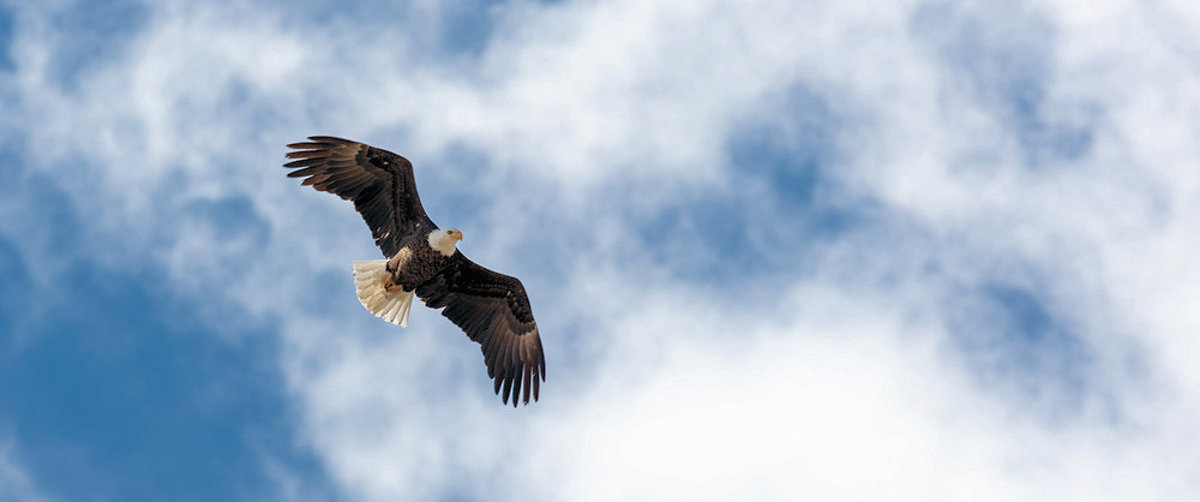
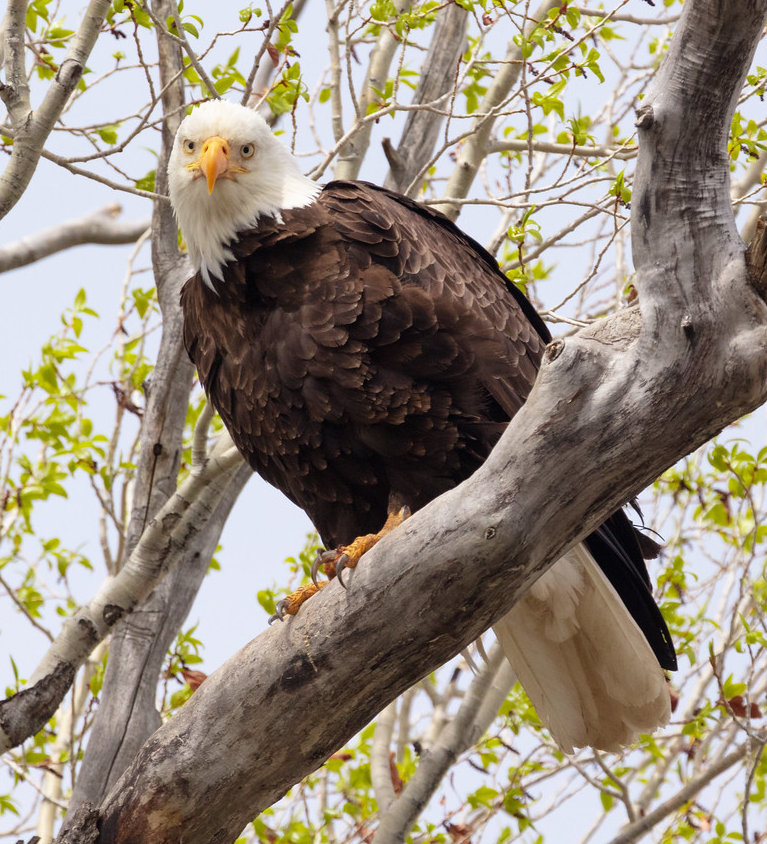
In Yellowstone National Park, the bald eagle is more than just a national symbol—it is a conservation success story that has transformed from an endangered rarity into a frequent sight for visitors.
Where and When to Spot Them
Bald eagles are year-round residents in Yellowstone, though their locations shift with the seasons:
- Best Spots: Look for them along the Madison River, Yellowstone Lake, and Hayden Valley. These areas provide the open water and tall trees they need for hunting and nesting.
- Winter Viewing: In the colder months, they often move to the Gardner River or lower elevations like Paradise Valley (just north of the park) to find unfrozen water.
- Pro Tip: Look for “white golf balls” in the trees—from a distance, the white heads of perched adults often look like small white spheres against the green or brown foliage.
Key Facts at a Glance
| Feature | Detail |
| Size | Wingspan of 5.5 to 8 feet; weight of 8–14 pounds. |
| Diet | Primarily fish (70–90%), but they also eat waterfowl and carrion. |
| Nests | The largest in North America; can be 8 feet across and weigh up to 2,000 pounds. |
| Lifespan | 15 to 20 years in the wild. |
Behavior & Ecology
- The “Silent” Shiver: Unlike the piercing scream used for them in movies (which is actually a Red-tailed Hawk’s call), real bald eagles make a series of high-pitched, chirping whistles.
- Opportunistic Hunters: While they are expert fishers, they are not above “pirating” food. They frequently steal catches from Ospreys or scavenge on elk and bison carcasses alongside wolves and bears.
- Vision: Their eyesight is roughly four times sharper than a human’s, allowing them to spot a fish underwater from hundreds of feet in the air.
Conservation Status
Yellowstone’s bald eagle population is considered stable. In 2019, park biologists monitored 31 territories, and while nesting success can fluctuate due to weather and food availability (like the decline of cutthroat trout), the birds have proven resilient by diversifying their diet to include more waterfowl and colonial nesting birds.