How to Get There and Brief Description
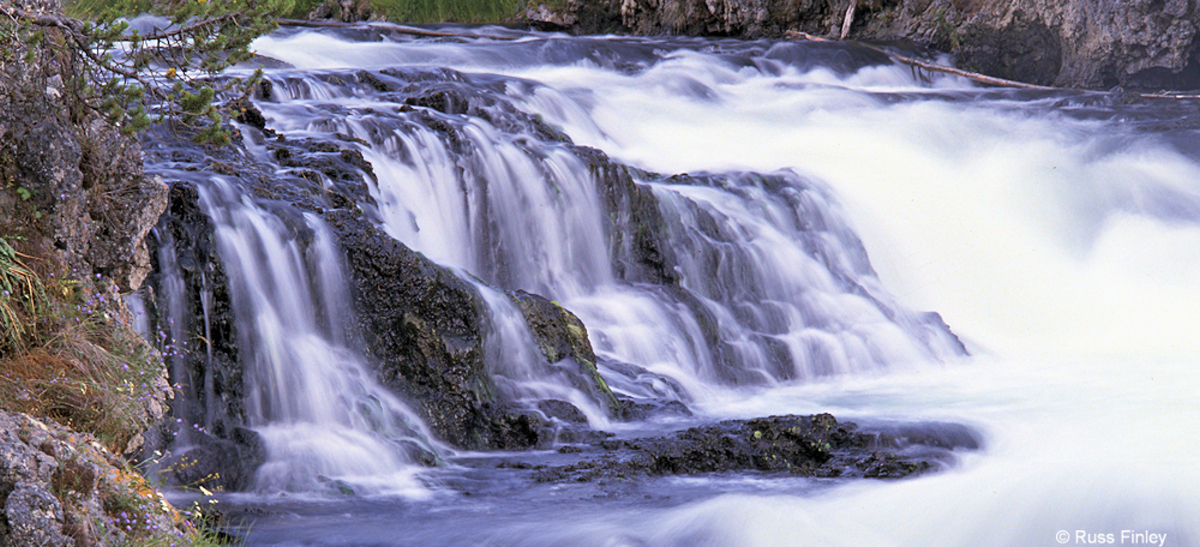
Firehole Falls is a stunning 40-foot waterfall located in the Firehole Canyon, a rugged section of Yellowstone where the river has carved through ancient volcanic rock.
Here is a deeper look into its history, geology, and how to best experience it.
1. Geological Origins
The waterfall is a direct result of Yellowstone’s volcanic past. The canyon walls are composed of rhyolite, a silica-rich volcanic rock from a massive lava flow that occurred roughly 600,000 years ago.
- The Barrier: Because rhyolite is much harder and more erosion-resistant than the surrounding rock, it created a natural shelf.
- Fish Migration: Historically, the 40-foot drop of Firehole Falls acted as a natural barrier, preventing fish from moving upstream. Consequently, the upper Firehole River was fishless until humans introduced trout species in the late 1800s.
2. The Firehole Canyon Drive
To see the falls, you must take the Firehole Canyon Drive, a 2-mile, one-way road (north to south) that starts just south of Madison Junction.
- The Viewpoint: There is a large pullout specifically for viewing the falls. It offers a great angle for photography, though it can get crowded during peak hours.
- Swimming Area: About 0.9 miles past the falls is the Firehole Canyon Swimming Area. Unlike most of Yellowstone’s frigid waters, this area is geothermally heated, making it one of the few places in the park where swimming is permitted (seasonally).
3. Tips for Visitors
- Timing: The falls are most powerful in late May and June during the spring snowmelt. By late summer, the flow decreases, but the surrounding canyon colors remain vibrant.
- Photography: For that “silky” water look, bring a tripod and use a long exposure (about 1–2 seconds). The soft light of the early morning or late afternoon helps avoid harsh glares off the dark rhyolite rocks.
- 2026 Season Note: If you are a fisherman, take note that as of 2026, the fishing season on the Firehole River now opens early on May 1st, giving you more time to enjoy the river before it warms up in mid-summer.
Safety Warning: Always stay behind the stone walls and railings. The canyon walls are steep and the river currents below the falls are extremely dangerous.