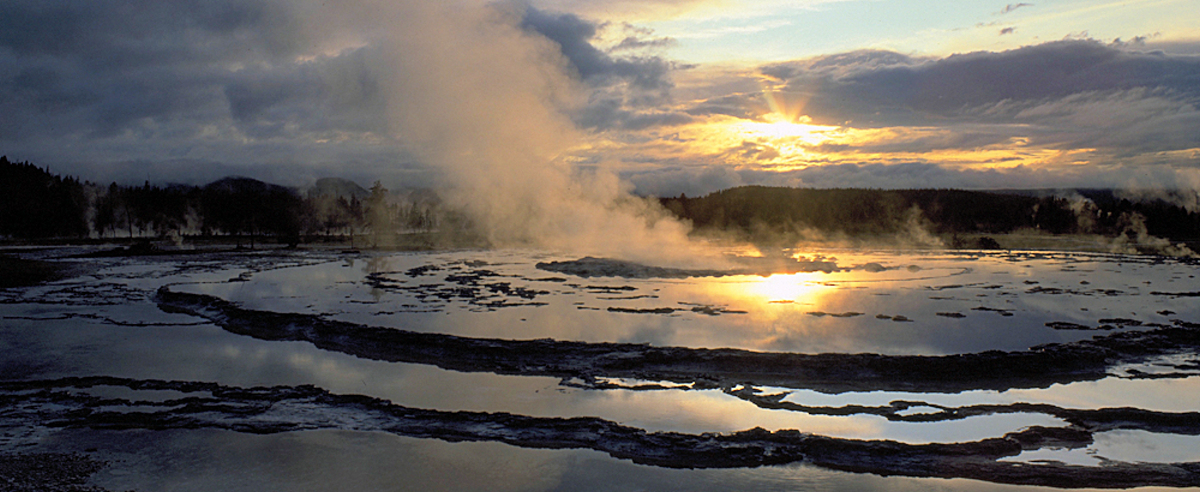
Yellowstone’s thermal areas are among the most dangerous natural features in the park, having caused more injuries and deaths than any other hazard—including wildlife. The primary danger is not just the visible boiling pools, but the ground itself, which is often a fragile crust overlying scalding water or acidic mud.
The Golden Rule: Stay on the Boardwalk
The most critical safety rule in Yellowstone is to always stay on designated boardwalks and trails.
- Deceptive Ground: What looks like solid, white earth is often a thin mineral crust (sinter) that can be as thin as a sheet of ice. Stepping off the boardwalk can cause you to break through into boiling water or superheated steam.
- Boiling Temperatures: Many hot springs are at or near the boiling point (approximately 198°F / 92°C at Yellowstone’s elevation), which can cause fatal or severe third-degree burns instantly.
- Acidity: While many springs are neutral, some features like those in the Mud Volcano area are highly acidic and can burn through clothing and skin.
Critical Safety Guidelines
Toxic Gases: Some areas can accumulate hydrogen sulfide or carbon dioxide. If you begin to feel nauseous or dizzy, leave the area immediately.
Supervise Children: Keep children within arm’s reach at all times. They often don’t recognize the danger of the steam and may be tempted to run or touch the water.
No Touching or Swimming: Never touch thermal water or runoff. Swimming or soaking in any thermal feature is strictly prohibited and can lead to death from amoebic meningitis or scalding.
Secure Your Belongings: If you drop a hat, sunglasses, or a camera into a thermal area, do not go after it. Report the loss to a ranger. Items thrown or dropped into features can clog vents and permanently damage the geyser’s plumbing.
No Pets Allowed: Pets are prohibited in all thermal areas and on boardwalks. They often mistake hot water for cold and can jump in with fatal consequences.