How to Get There
Tower Fall is 17 miles north of Canyon or two miles south of Roosevelt. During the winter months, the frozen falls are accessible via cross country skies.
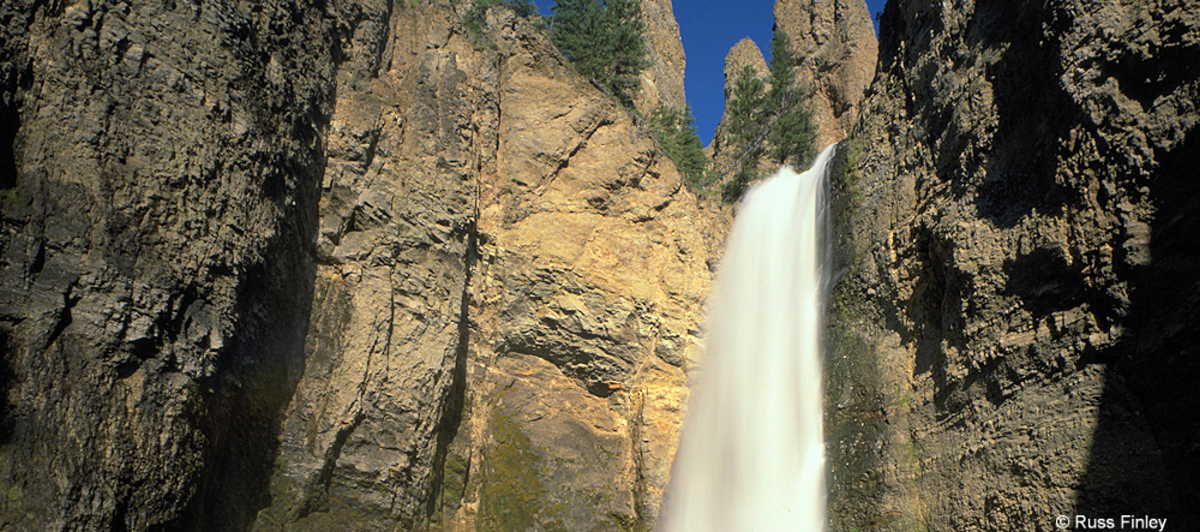
Beyond its striking 132-foot drop, Tower Fall is a site defined by its unique volcanic geology and its pivotal role in American history.
🌋 Geology: The “Towers”
The waterfall gets its name from the jagged rock pinnacles—or minarets—that crown its brink. These are composed of volcanic breccia, a mixture of ash and rock fragments from ancient eruptions. Over time, erosion wore away the softer surrounding material, leaving these harder spires standing like sentinels.
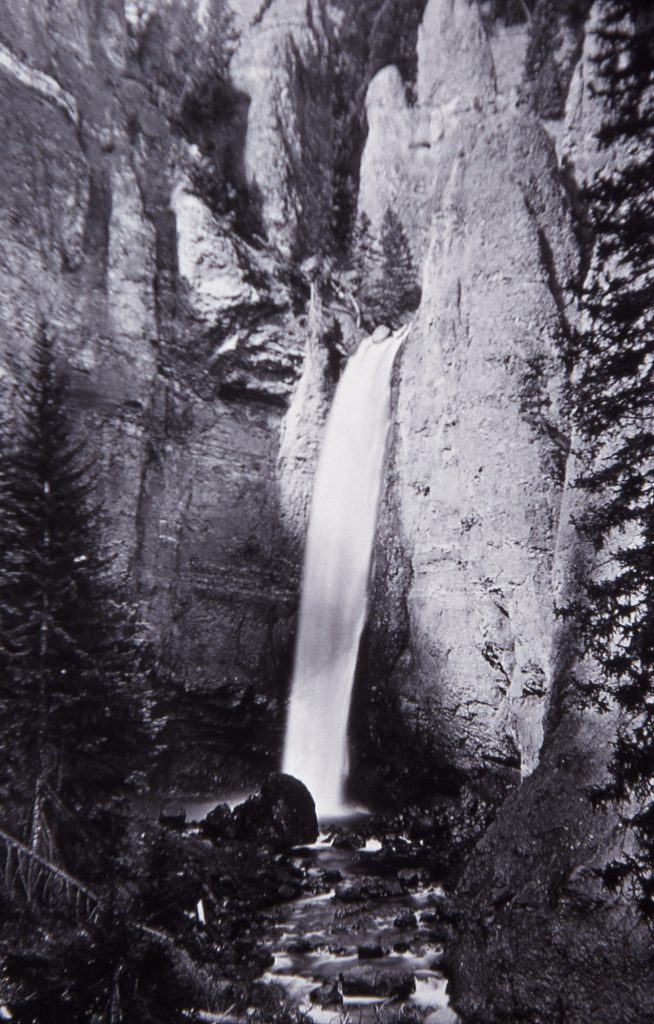
- The Vanishing Boulder: For over a century, a large boulder sat precariously balanced at the very edge of the falls. It was a famous landmark until June 1986, when it finally succumbed to gravity and tumbled into the pool below, permanently changing the waterfall’s silhouette.
- Basalt Columns: Nearby, you can see “palisades”—spectacular vertical basalt columns formed by cooling lava flows, best viewed from the Calcite Springs Overlook just north of the falls.
🎨 History: The Painting That Saved the Park
In 1871, the artist Thomas Moran and photographer William Henry Jackson visited the falls as part of a survey expedition. Moran’s vivid, majestic painting of Tower Fall captivated lawmakers in Washington D.C. This artwork, along with Jackson’s photos, provided the visual proof of Yellowstone’s wonders that convinced Congress to establish it as the world’s first national park in 1872.
🥾 Hiking & Trail Status
There is often confusion about the trails at Tower Fall. Here is the current reality for visitors:
| Feature | Difficulty | Description |
| Main Overlook | Easy | A short, 150-yard paved walk from the general store. It provides a head-on view of the falls. |
| The River Trail | Strenuous | A steep, 0.5-mile dirt trail that drops 300 feet to the banks of the Yellowstone River. |
| Base of the Falls | CLOSED | The trail to the actual base of the waterfall was permanently closed in 2004 due to severe erosion and rockslides. You can no longer safely or legally stand at the bottom of the falls. |
❄️ Winter Access
During the winter, the road to the falls is closed to regular vehicles. The area becomes a serene destination for cross-country skiers and snowshoers. The waterfall often freezes into a massive, translucent ice dome, a sight few summer visitors ever get to see.