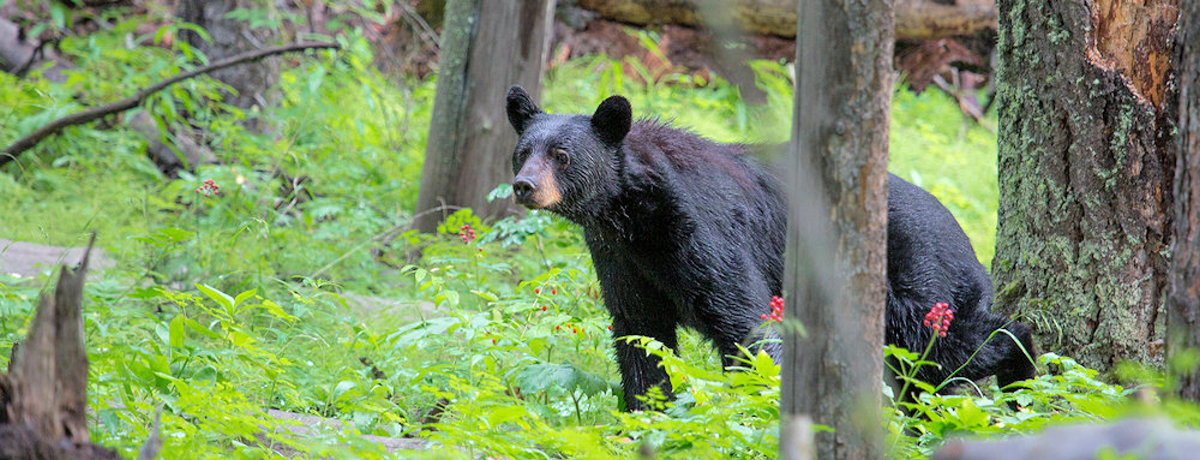
In the high-alpine forests of Yellowstone, the American Black Bear (Ursus americanus) is the charismatic, often misunderstood neighbor to the more famous grizzly. While they share the same wilderness, black bears have carved out a unique niche as the park’s most versatile and agile residents.
Where to Find Them: The “Northern Range”
Black bears are forest-dwelling creatures, meaning they are most commonly spotted in the northern half of the park where the trees meet the meadows.
- Tower-Roosevelt: This is the “Black Bear Capital” of Yellowstone. The road between Tower Junction and the Petrified Tree is famous for sightings.
- Mammoth Hot Springs: Bears are frequently seen foraging on the hillsides surrounding the historic terraces.
- Bechler Region: In the remote southwest corner of the park, the lush “Cascades Corner” provides ideal, secluded habitat for black bears.
Identification: More Than Just a Color
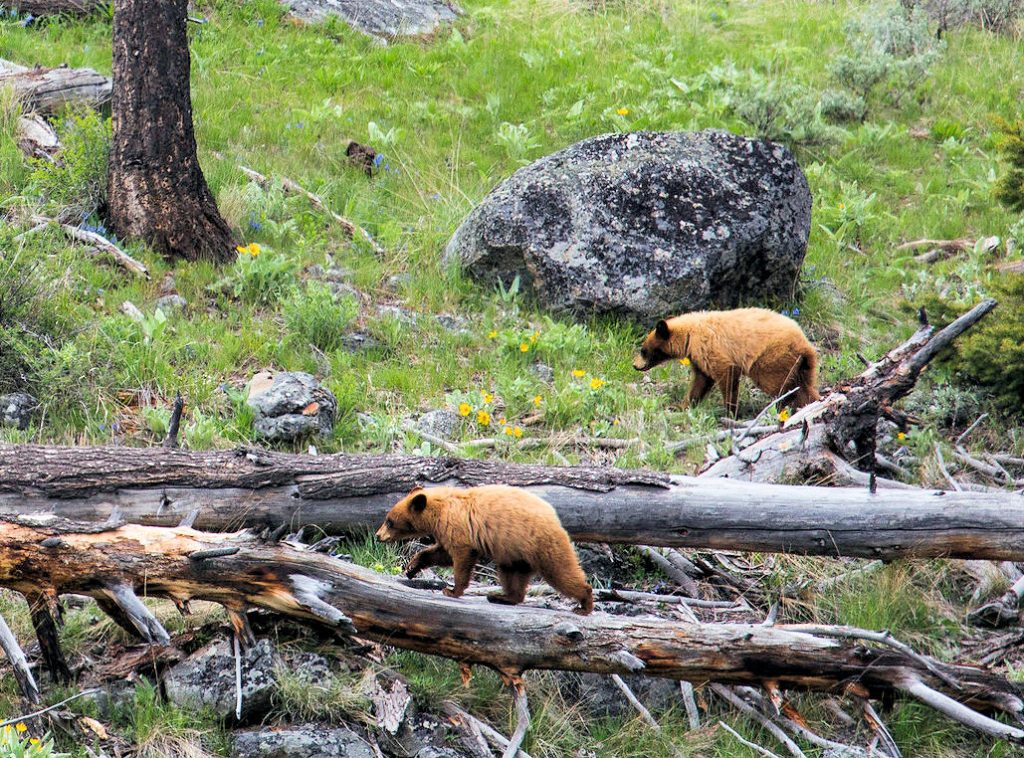
One of the most common mistakes visitors make is assuming a brown bear is a grizzly. In Yellowstone, black bears are “polymorphic,” meaning they come in several colors:
- Black: About 50% of the population.
- Cinnamon/Brown: Very common, often leading to grizzly confusion.
- Blonde: Rare, but stunningly beautiful against the green pines.
How to tell it’s a Black Bear:
| Feature | Black Bear Characteristics |
| Profile | A straight, Roman nose (grizzlies have a “dished” or concave face). |
| Shoulders | No prominent muscle hump (grizzlies have a large hump above the front teal). |
| Ears | Tall, pointed, and prominent. |
| Claws | Short and curved (ideal for climbing trees). |
Behavior and Diet
Black bears are the ultimate opportunists. They are omnivores, with a diet consisting of about 90% plants and insects.
- The Master Climbers: Unlike grizzlies, black bears are expert climbers. Sows (females) will often “park” their cubs high in a Douglas fir tree while they forage nearby to keep them safe from wolves and male bears.
- The Spring Buffet: After emerging from their dens in April, they head for the “green-up”—the first tender shoots of grass and clover appearing along roadsides.
- Hyperphagia: In the fall, they enter a state of biological frenzy, eating nearly 20,000 calories a day (mostly berries and whitebark pine nuts) to put on the fat necessary to survive a 5-to-6-month winter sleep.
Bear Safety & Ethics
Yellowstone’s black bears have a long history with humans. In the mid-20th century, “beggar bears” were common along roadsides. Today, thanks to strict management, they are wild and wary.
- The 100-Yard Rule: It is illegal to be within 100 yards (91 meters) of a bear. If the bear changes its behavior because of you, you are too close.
- Bear Spray: Always carry it, even on popular boardwalks. It is 90% effective at stopping an aggressive encounter.
- Food Storage: “A fed bear is a dead bear.” Once a bear learns to associate humans with food, it becomes a safety hazard and usually must be euthanized.
Pro Tip: If you see a “Bear Jam” (a line of cars and rangers), pull completely off the road. Rangers are there to manage the crowd and ensure the bear stays wild.